Just-A-Bull Breed Standard
Temperament
Stable, confident dogs that are able to thrive in a family setting. These dogs must be clear headed and handle all situations they are put in by their family. They must have the ability to enjoy public settings properly managed by their owners and maintain the companionship of the American Bully. With the addition of a limited percentage of guardian class breeds, these dogs should always have their families safety and well being as their first priority. They should have nothing but loyalty and love for their owners and everyone they meet!
Body
Extreme features from head, toe, to tail! These bulls must have extreme muscle mass while maintaining definition! Proper proportions that result in great movement and function. The first feature that should be noticed is the extreme head type, followed by an extreme chest and spread. The chest and spread are crucial to set up extreme muscling in the upper shoulder transitioning into the neck. The dog’s torso must have a barrelled ribcage with a tapered waist. The tapered waist sets up a rear with extreme girth and proper angulation. These dogs are to be compact, powerfully built, athletic bull-type dogs combining the mass, substance, functional structure, stability, and presence. The dog should project confidence, strength, and calm authority without exaggeration or loss of function.
Height: Males: 18-21 inches Females: Minimum 17 inches; preferred 18-21
The breed should never appear leggy, narrow, or overly extreme. Substance, proportion, and symmetry are essential.
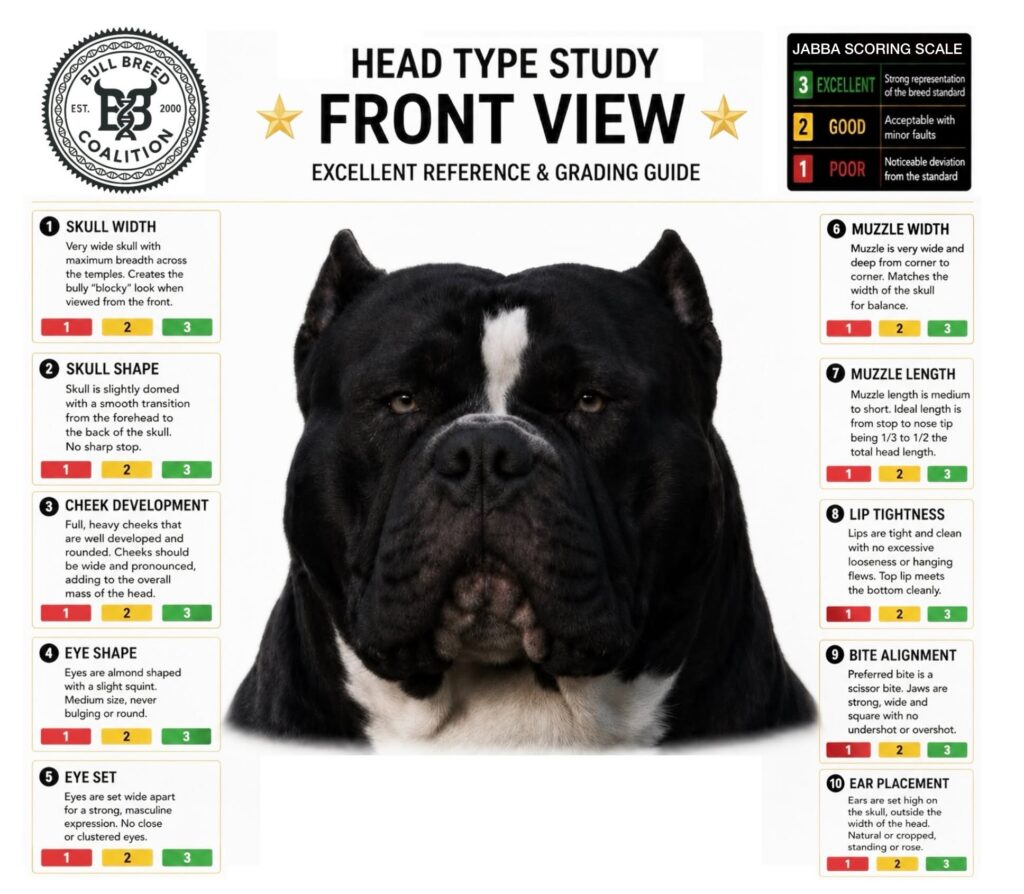
Head: The head is large, broad, and blocky, proportional to the body, and a defining feature of the breed. Skull is wide with pronounced cheek muscles and strong temporal development. Forehead is broad with a visible but not exaggerated stop. Ears may be cropped or natural; when natural, they are medium-sized and carried rose or semi-pricked. Overall, the head should show power without breathing restriction, maintaining functionality and endurance. Muzzle is short to moderate in length, wide, deep, and square, with excellent underjaw strength. Lips are thick and slightly loose but not pendulous. Nose is large with wide nostrils. Eyes are set well apart, medium in size, round to slightly oval, and convey alertness and confidence. Ears may be cropped or natural; when natural, they are medium-sized and carried rose or semi-pricked. Overall, the head should show power without breathing restriction, maintaining functionality and endurance.
Neck: The neck is thick, muscular, and slightly arched, blending smoothly into the shoulders. Length is short to medium, proportional to the body. Heavy muscle mass is present without excessive skin. The neck should support the large head easily and flow naturally into the top-line.
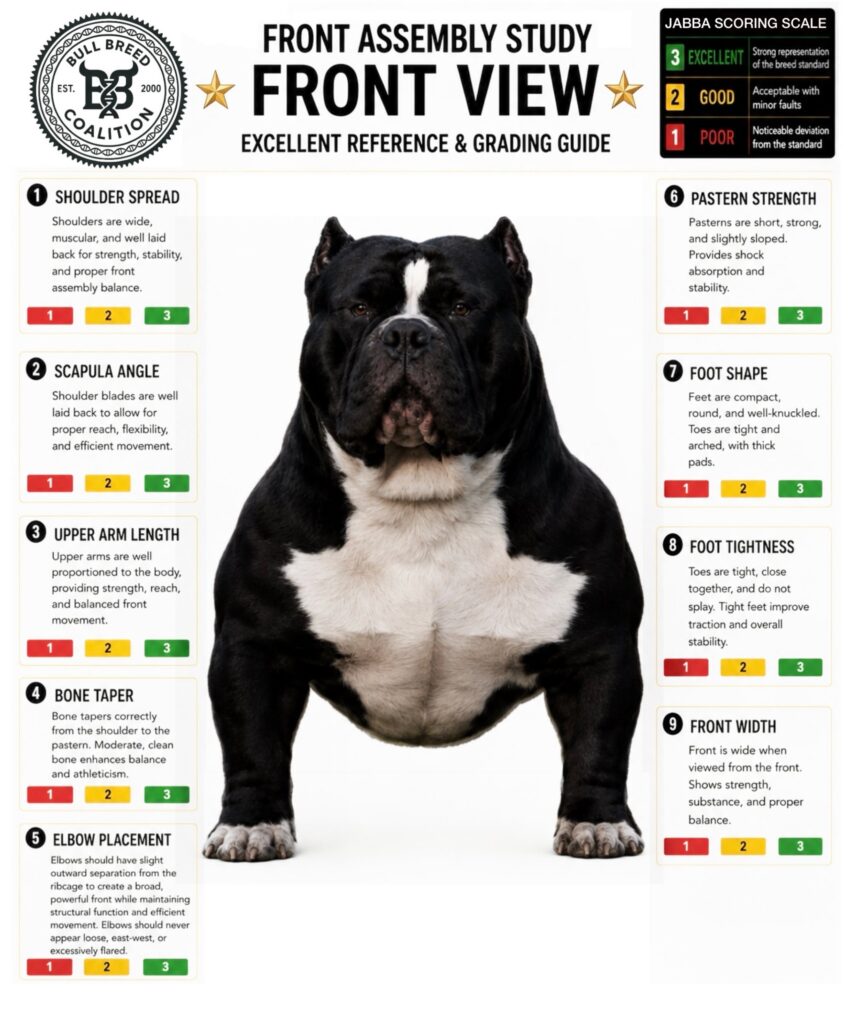
Forequarters: The forequarters are extremely strong and wide. Shoulders are broad, well-muscled, and laid back. Upper arms are thick and powerful with correct angulation. Forelegs are straight, heavy-boned, and set wide apart when viewed from the front. Elbows are tight and not turned in or out. Pasterns are short, strong, and slightly sloped. Feet are compact with well-arched toes and thick pads. The chest is very deep and wide, extending well down between the forelegs.
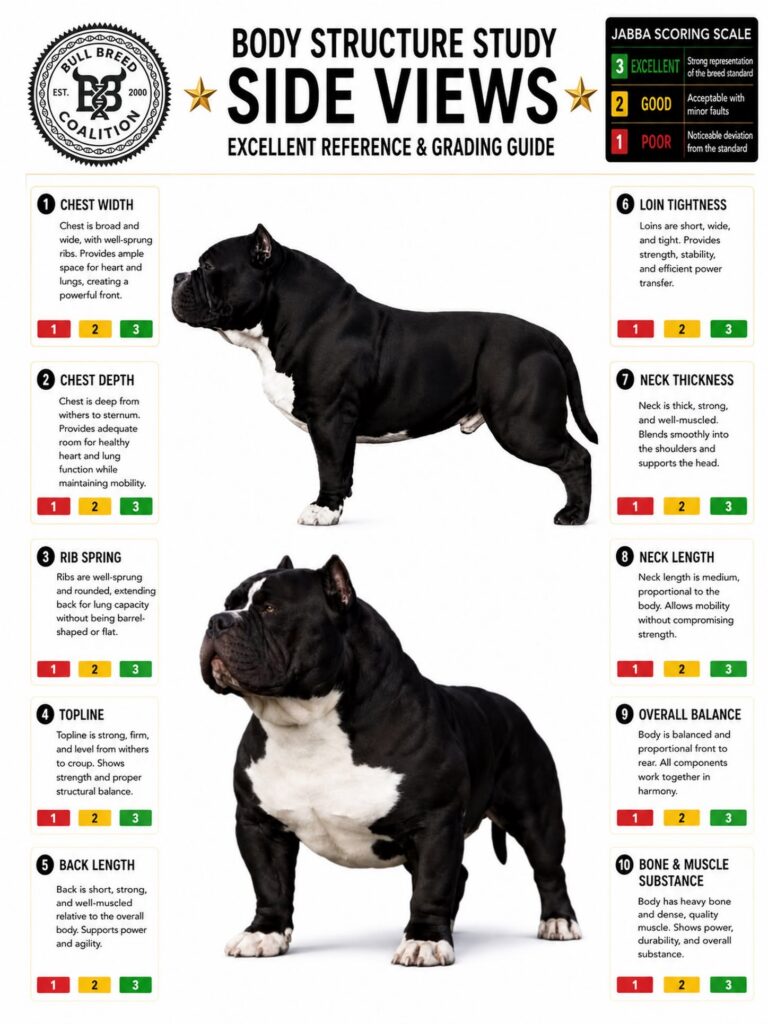
Body: The body is compact, dense, and heavily muscled, giving a powerful yet athletic impression. Rib cage is deep, well-sprung, and rounded. Chest is broad and prominent, extending past the elbows. The body length is slightly longer than height, maintaining a balanced silhouette. The underline shows slight tuck-up but never appears lean or whippet-like. Mass should come from muscle and bone, not excess fat.
Back: The back is short, broad, and strong. Top-line is level or shows a very slight rise over the loin. Loin is wide, thick, and muscular. The back must support the dog’s weight without weakness or sway. Overall strength and stability of the top-line are essential.
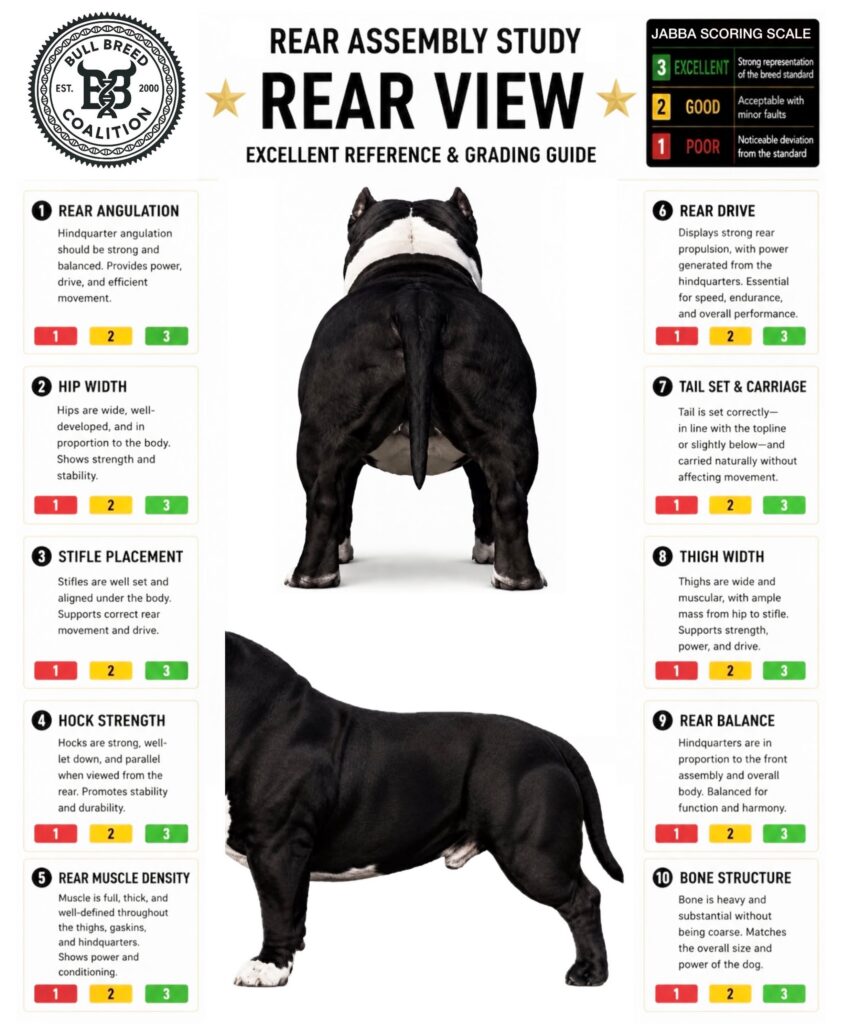
Hindquarters: The hindquarters are powerful, broad, and well-muscled, matching the forequarters in substance. Hips are wide and strong. Thighs are thick with clearly defined muscle. Stifles are well-bent, providing drive and propulsion. Hocks are low, strong, and straight when viewed from the rear. From the rear, the dog should appear wide, solid, and symmetrical, with no cow-hocking or narrowness.
Tail: The tail is medium length, thick at the base, and tapering toward the tip. Set low to moderate. Carried straight or in a gentle curve when relaxed; may rise slightly when alert. Docking is not required and not preferred.
Colors: All colors, patterns, and markings are accepted. This includes, but is not limited to: Solid colors, Parti, piebald, and patched patterns, Brindle in all variations, Tri-color combinations. Color, nose pigmentation, and eye color are secondary to temperament, health, and structure.